
Breaking News
BREAKING: Iran Did Not Randomly Hit Prince Sultan Air Base

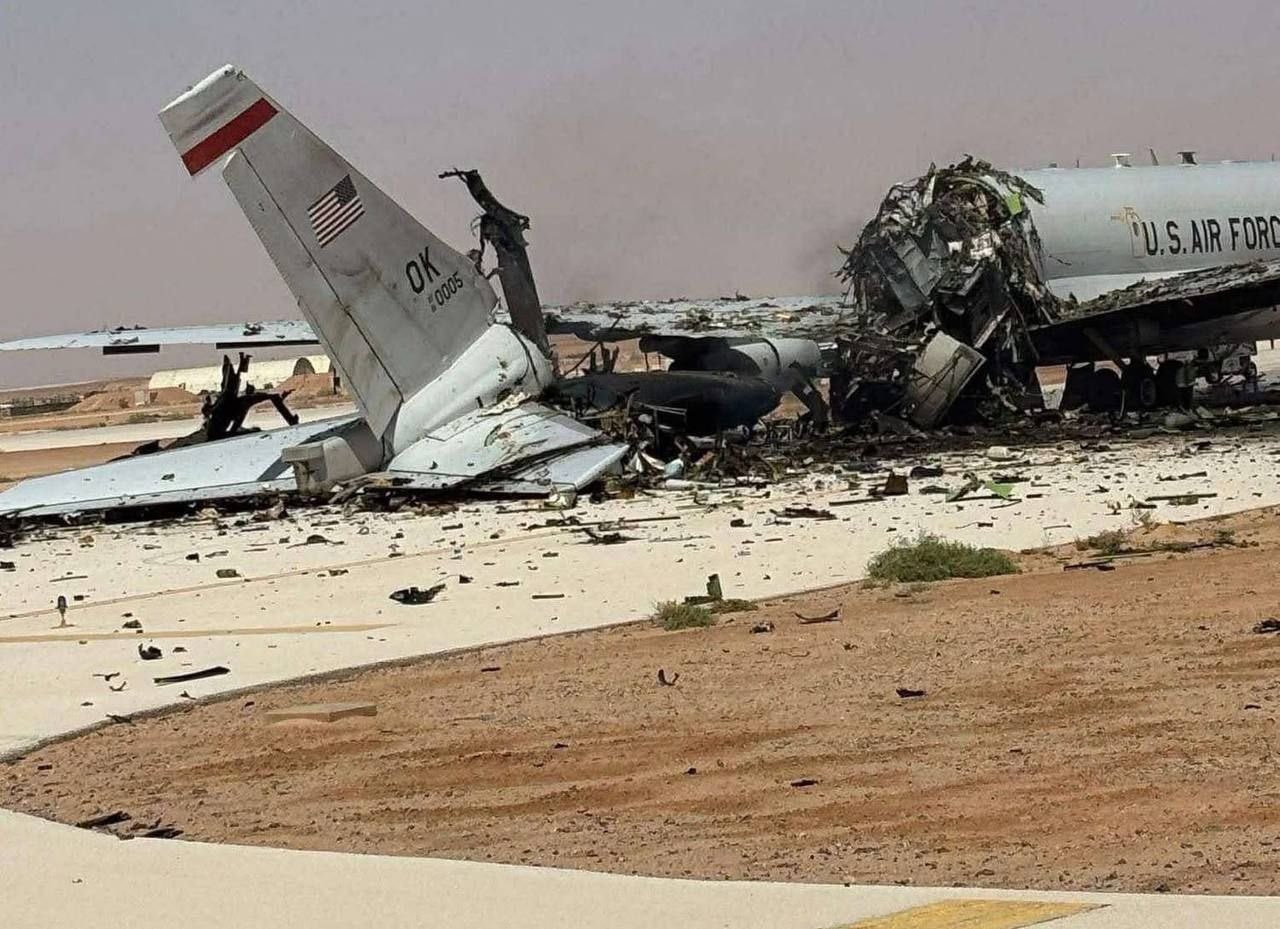
BREAKING: Iran Did Not Randomly Hit Prince Sultan Air Base. New analysis suggests the attack geometry targeted the E-3 AWACS parking area specifically, not the tankers beside it.
Defence Security Asia reported within hours that post-strike Landsat imagery indicates “one or two E-3G Sentry aircraft may have been destroyed or rendered inoperable.” The publication concluded the strike pattern shows “the E-3G parking area appearing more central to the attack geometry” than the KC-135 tankers.
If correct, this was not a punitive barrage. It was a precision operation to decapitate American airborne command and control.
Air and Space Forces Magazine confirmed “a photo showed significant damage to a USAF E-3” and that “multiple refueling aircraft and an E-3 Sentry AWACS command and control plane are among the aircraft damaged.” Retired Air Force Colonel John Venable told the Wall Street Journal: “It’s a huge deal. It hurts the U.S.‘s ability to see what’s happening in the Gulf and maintain situational awareness.”
Planet Labs satellite imagery from February 21 showed 43 aircraft on the PSAB tarmac, including 13 KC-135 tankers and six E-3 Sentry AWACS aircraft per Times of Islamabad.
Six of America’s 16 operational AWACS were concentrated at a single base in the open. No hardened shelters. No dispersal. Parked on the apron like commercial aircraft at a regional airport.
Iran struck with six ballistic missiles and 29 drones per AP and WSJ. Most were intercepted by Saudi Patriot and THAAD systems. But the ones that got through hit the command layer, not the combat layer. The E-3 does not drop bombs. It tells every other aircraft where to drop them. It tracks Iranian drones, coordinates F-35 strike packages, manages tanker flows, and maintains command links across the entire theatre. Damage one E-3 and you do not lose a weapon. You lose the system that makes every weapon effective.
CENTCOM has not commented on the damage. No official statement confirming or denying destruction. The Aviationist reported that Sentinel-2 short-wave infrared imagery showed “a heat signature at the same location” consistent with “flames and hot gases in the smoke towering from the area.” The Aviation Geek Club confirmed the E-3 and multiple KC-135s were damaged. No outlet has confirmed total destruction, but every outlet confirms the aircraft is out of action.
And the replacement does not exist. The Boeing 707 airframe has not been manufactured since 1992. The E-7 Wedgetail successor has two prototypes funded but will not fly until 2028. Each E-3 costs $537 to $596 million in 2026 dollars. There are 16 left. Six were at this base. The war is 28 days old and America’s airborne command architecture is being degraded by an adversary whose missile capability CENTCOM says has been reduced by 90 percent.
That is the number that should terrify every defence planner. Ninety percent of Iran’s missiles are gone. The remaining ten percent hit the brain.
Over 300 service members have been wounded in Operation Epic Fury per Air and Space Forces Magazine. Thirteen killed. The carrier is in Croatia for a laundry fire.
The tankers are damaged on the ground. The AWACS is out of action. And a three-star general is telling 35,000 reservists to pack their desert uniforms and prepare their families.See more, details. .
-

 Breaking News7 months ago
BREAKING NEWS: Labour Congress Call For Review Of Minimum Wage, Propose N150,000 Pay For Lagos Workers
-

 Entertainment7 months ago
Burna Boy Used To Squat In My House – Cubana Chief Priest
-

 Breaking News7 months ago
ALLEGED BLASPHEMY: Angry Youths Kill Female Food Seller In Niger State
-

 Entertainment7 months ago
BBNaija S10: I Was Prevented From Returning To Show Despite Being Medically Fit – Sabrina
-

 Entertainment7 months ago
Popular Nigerian Comedian, Josh2Funny And Wife, Bina, Welcome Third Son
-
 Entertainment7 months ago
[VIDEO] Ibom Air Incident: Comfort Emmanson Opens Up on Traumatic Experience
-

 Breaking News7 months ago
BREAKING: CAC Extends New Fee Regime To October 1
-

 Entertainment7 months ago
Media Personality Toke Makinwa Make Confession On Fearful Pregnancy Journey, Shares Fresh Maternity Shoot
-
 Breaking News7 months ago
BREAKING: 1 Israeli Soldier Dead, 9 Injured, 4 Missing
-
 Breaking News7 months ago
Bukuyum: Air Operations Force Bandits To Release 70 Kidnapped Victims In Zamfara
-

 Politics7 months ago
Soludo Mocks Obi, Declares ADC and LP “Dead” After Anambra By-elections
-
 Breaking News7 months ago
BREAKING: Hamas Captures Israeli Soldiers in Gaza