
Health
10 Nigerian Foods Rich in Copper for Better Health


Copper is one of the essential trace minerals that the body needs in small amounts, yet it plays a very big role in keeping us healthy.
This vital nutrient helps in the production of red blood cells, supports the immune system, aids brain development, and contributes to strong bones and connective tissues.
Because the body cannot produce copper on its own, we must get it from the foods we eat. A deficiency in copper can lead to anemia, fatigue, weak bones, and even problems with the nervous system.
Recommended Daily Intake (RDI) of Copper (NIH):
Adults (men & women): 900 micrograms (µg) per day
Pregnant women: 1,000 µg/day
Breastfeeding women: 1,300 µg/day
Children: 200–890 µg depending on age
Thankfully, Nigeria is blessed with many local foods that are naturally rich in copper. In this article, you will learn about 10 Nigerian foods that are excellent sources of copper, and how they can fit into your everyday diet.
1. Egusi Seeds (Melon Seeds)
Health Benefits of egusi
Egusi is a household name in Nigeria, especially because of the popular egusi soup.
Apart from being delicious, egusi seeds are loaded with minerals, particularly copper. 100 grams of egusi contains about 1.5–2.0 mg of copper, which is more than enough to meet your daily needs.
Adding egusi soup to your meals not only satisfies your taste buds but also boosts your copper intake.
2. Groundnuts (Peanuts)
Groundnuts healthy foods to eat everyday in Nigeria
Roasted or boiled groundnuts are a common snack across Nigeria.
They are affordable, tasty, and nutritious. Groundnuts provide about 1.1 mg of copper per 100 grams.
Whether you enjoy them plain, as groundnut paste, or in sauces, they are a reliable way to get this essential mineral.
3. Tiger Nuts (Aya)
Health benefits of Tiger nuts
Tiger nuts, known as aya in Hausa, are popular in the North and are often used to make the refreshing drink kunu aya.
They contain around 0.6–0.8 mg of copper per 100 grams.
Tiger nuts are also rich in fiber and healthy fats, making them a great snack for digestive and heart health.
4. Cashew Nuts
Health Benefits of Cashew Nuts
Nigeria is one of the largest producers of cashew nuts in Africa.
These nuts are not only tasty but also one of the richest sources of copper, providing about 1.9–2.2 mg per 100 grams.
Just a handful of cashews can meet your daily copper requirement, while also giving you healthy fats and protein.
5. Sesame Seeds (Beniseed)
Sesame seeds, locally called beniseed, are widely grown in Northern Nigeria and used in soups, snacks, and condiments.
They are packed with copper, offering about 1.5–1.8 mg per 100 grams.
Beniseed soup is not only nourishing but also a powerful source of minerals for the body.
6. African Locust Beans (Iru/Dawadawa)
Health benefits of locust beans
Iru, also called dawadawa, is a traditional seasoning used in many Nigerian soups and stews.
Beyond its strong flavor, it provides about 0.9–1.0 mg of copper per 100 grams.
This makes iru not just a taste enhancer but also a nutrient booster for your daily meals.
7. Cowpeas (Beans)
Beans are a staple in Nigerian diets, whether in the form of ewa riro, akara, or moi moi.
They supply around 0.6–0.9 mg of copper per 100 grams.
Regular consumption of beans helps meet your copper needs while also providing protein, iron, and fiber.
8. Cocoa
Nigeria is a major producer of cocoa, which is used to make cocoa powder and chocolate.
Cocoa is extremely rich in copper, containing about 3.5–4.0 mg per 100 grams.
Drinking cocoa beverages or using cocoa powder in your recipes can significantly boost your copper intake.
9. Snails (Congo Meat)
Health Benefits of Snail Meat
Snail meat, popularly called Congo meat, is a delicacy in many parts of Nigeria.
Apart from being low in fat, it provides about 1.2–1.5 mg of copper per 100 grams.
Snails are also rich in iron and protein, making them a nutritious choice for those looking to improve their mineral intake.
10. Palm Kernel
Palm kernel oil
Palm kernel oil
Palm kernel, the inner part of the palm fruit, is often used to produce palm kernel oil.
It contains about 0.7–0.9 mg of copper per 100 grams.
Palm kernel is also rich in other micronutrients and healthy fats, making it a valuable addition to the Nigerian diet.
Conclusion
Copper may be needed in small amounts, but its impact on health is huge. From boosting immunity to supporting red blood cell production, copper is a mineral you should not overlook. The Recommended Daily Intake (RDI) is just 900 µg for adults, which means that adding foods like cashews, egusi, cocoa, or groundnuts to your meals can easily meet your daily needs.
Next time you enjoy a bowl of egusi soup, a handful of cashews, or a cup of cocoa, remember that you are also nourishing your body with copper. These Nigerian foods are not only delicious but also powerful allies for your health.
-

 BREAKING NEWS1 month ago
Ondo Education Ministry Fixes Cut-Off Marks for Public Secondary School Admission For 2026/2027 Academic Session
-

 BREAKING NEWS2 months ago
EXCLUSIVE: NG Exceeds 2024 Borrowing Target by ₦4.79tn as Debt Hits ₦12.62tn
-

 BREAKING NEWS2 months ago
Oyo Police Bust Alleged Railway Vandalism Syndicate, Recover Stolen Rail Tracks Worth ₦200 Million
-

 BREAKING NEWS2 months ago
JUST-IN: 28-Year-Old Nigerian Man Deported From Ireland After Conviction for T£rror Offences and Mass M¥rder Threats in UK
-

 BREAKING NEWS2 months ago
Tinubu’s Reforms Push Nasarawa Allocation From ₦4.5bn to ₦16bn — Sule
-

 BREAKING NEWS2 months ago
How Woman Arrested for Br¥talising 13-Year-Old Domestic Worker in Imo state
-

 BREAKING NEWS3 months ago
Gauteng Police and Brand Protectors Seize Suspected Counterfeit Goods Worth R371,700 After Inspecting 13 Shops During Marabastad Crackdown
-
 Health1 month ago
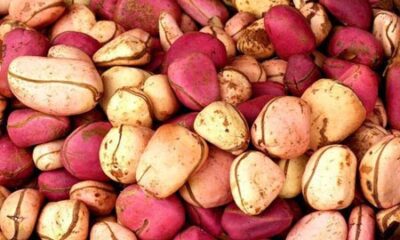
Health Benefits of Kola Nut and What to Know Before Consuming It