
Breaking News
Civil War: How Victor Banjo’s Political Ambition Destroyed His Military Career, Led To His Death — Gowon

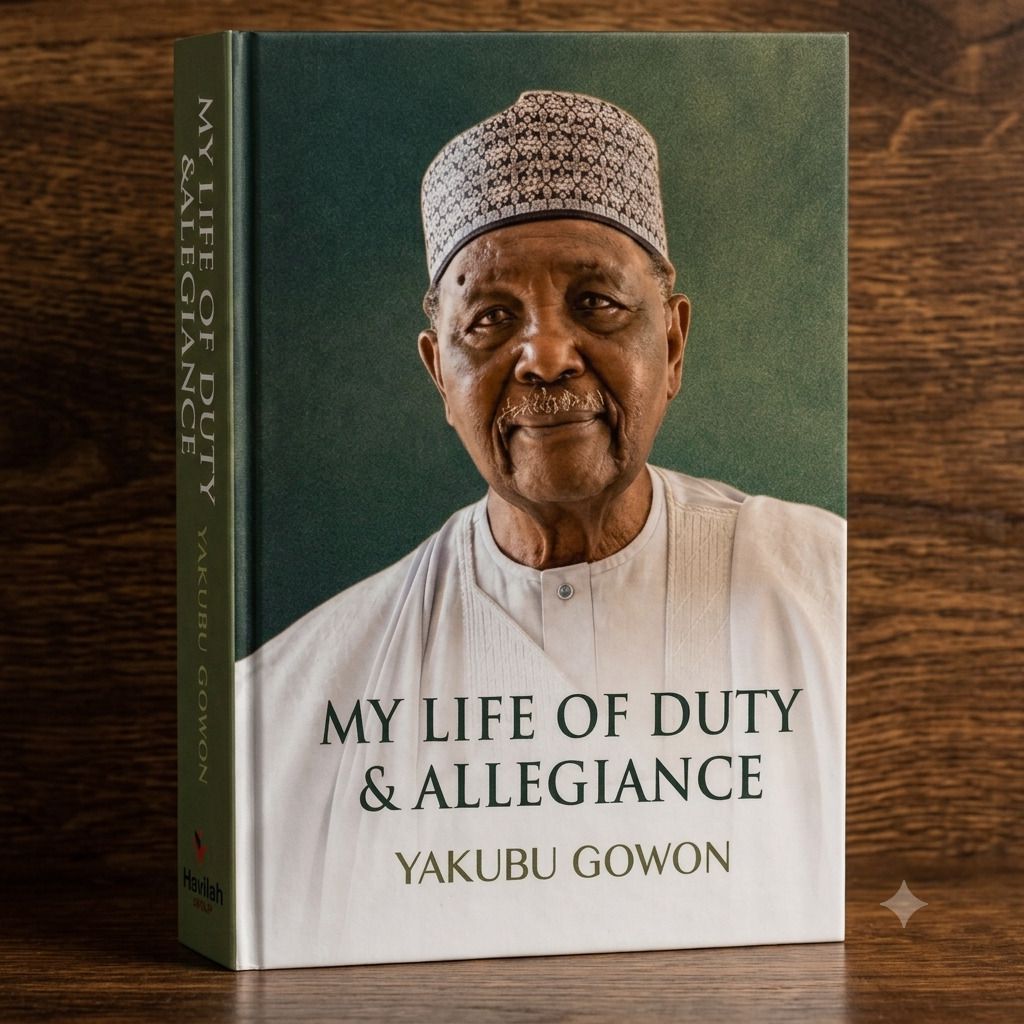
Former Head of State, Yakubu Gowon, has revealed that the political inclinations of the late Col. Victor Banjo ultimately ruined his military career and led to his execution during the Nigerian Civil War.
Gowon made the disclosure in his newly unveiled autobiography, *My Life of Duty and Allegiance*, presented in Abuja on Tuesday.
Victor Banjo remains one of the most controversial figures of the Nigerian/Biafran Civil War. Widely regarded as the first university graduate to enlist in the Nigerian Army, Banjo studied Mechanical Engineering before joining the military alongside educated officers such as Chukwuemeka Odumegwu Ojukwu, Emmanuel Ifeajuna, Ahmadu Ali, Austen Peters and Adewale Ademoyega.
On page 139 of the memoir, Gowon recounted how Banjo and Ojukwu became deeply involved in political discussions during the crisis-ridden First Republic, when tensions among Nigeria’s founding political leaders had worsened.
According to Gowon, the officers explored possible military intervention amid the deteriorating relationship between Nnamdi Azikiwe and Abubakar Tafawa Balewa, while Obafemi Awolowo remained imprisoned in Calabar.
“Political historians have copiously documented the cause and course of how Zik and Balewa, who represented the East and the North respectively, could not make the alliance between their respective parties work,” Gowon wrote.
He added that discussions between Ojukwu and Banjo centred on ways the military could intervene in favour of Azikiwe to resolve the political deadlock.
“The two military officers reasoned that if the military did not intervene, one way or the other, particularly in favouring Zik in the unfolding political drama, we might eventually be blamed for whatever happened to the young Nigeria,” he stated.
Gowon revealed that he was later approached by Ojukwu, Banjo and another senior officer, David Ejoor, to support what appeared to be a broad-based military intervention involving officers from the country’s major regions.
According to him, he immediately became uncomfortable with the proposal because it contradicted military ethics and constitutional order.
“I had always known Ojukwu to be politically savvy. The same, too, could be said of Banjo, whose high-level political sophistication coloured his perspectives, ruined his military career and eventually cost him his life in the hands of his compatriot, Ojukwu,” Gowon wrote.
“Both men appeared too eager to join the political fray.”
The former Head of State explained that his inclusion was intended to project the intervention as a national effort involving officers from all regions of the country.
“To them, I represented the missing link of the jigsaw puzzle,” he said, noting that his support as a Northerner was needed to legitimise the proposed action.
Gowon said he firmly rejected the idea, insisting that the military owed loyalty to the constitutional government of the day rather than to political interests.
“We were all trained to be officers in a disciplined Army that was loyal and supportive of the political leadership,” he stated.
“For me, therefore, any intervention on behalf of Zik, who we all respected but knew was a ceremonial President, was questionable because it would have amounted to a military-aided civilian takeover of government.”
He added that he warned the officers against embarking on unconstitutional actions, telling them: “God helps anyone that starts any trouble.”
Banjo would later emerge as a prominent figure in the Nigerian Civil War after defecting to the Biafran side following the 1966 coups and the collapse of relations between the Federal Government and the Eastern Region.
In 1967, he led Biafran troops during the invasion of the Mid-West Region, a campaign that initially recorded rapid success and brought Biafran forces close to Lagos before they were repelled by federal troops.
-

 Breaking News9 months ago
BREAKING NEWS: Labour Congress Call For Review Of Minimum Wage, Propose N150,000 Pay For Lagos Workers
-

 Breaking News9 months ago
ALLEGED BLASPHEMY: Angry Youths Kill Female Food Seller In Niger State
-
 Entertainment9 months ago
Burna Boy Used To Squat In My House – Cubana Chief Priest
-

 Entertainment9 months ago
Popular Nigerian Comedian, Josh2Funny And Wife, Bina, Welcome Third Son
-

 Entertainment9 months ago
BBNaija S10: I Was Prevented From Returning To Show Despite Being Medically Fit – Sabrina
-

 Entertainment9 months ago
Media Personality Toke Makinwa Make Confession On Fearful Pregnancy Journey, Shares Fresh Maternity Shoot
-
 Entertainment9 months ago
[VIDEO] Ibom Air Incident: Comfort Emmanson Opens Up on Traumatic Experience
-

 Breaking News9 months ago
BREAKING: CAC Extends New Fee Regime To October 1
-

 Breaking News9 months ago
BREAKING: 1 Israeli Soldier Dead, 9 Injured, 4 Missing
-

 Breaking News9 months ago
Bukuyum: Air Operations Force Bandits To Release 70 Kidnapped Victims In Zamfara
-
 Politics9 months ago
Soludo Mocks Obi, Declares ADC and LP “Dead” After Anambra By-elections
-
 Breaking News9 months ago
BREAKING: Hamas Captures Israeli Soldiers in Gaza