
BREAKING NEWS
Nigeria’s Rising Cost of Living: From 1999 to 2026

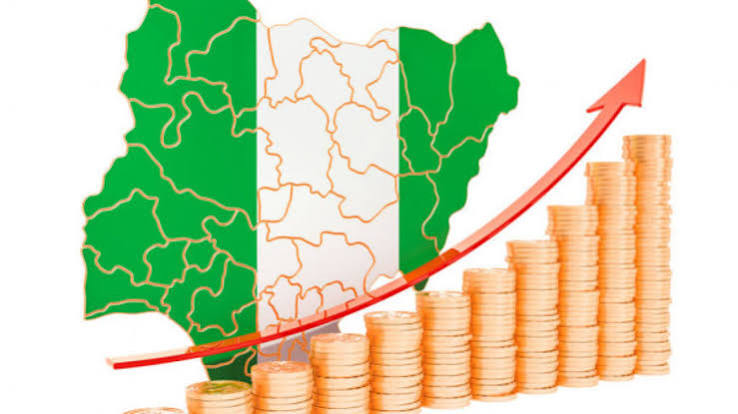
For twenty-seven years, presidential elections in Nigeria’s Fourth Republic have been contested on promises of economic renewal. Yet for the average household, economic policy is ultimately judged by a simpler question: what can a monthly paycheck actually buy?
That is the more honest measure of economic progress. A wage can rise from ₦3,000 to ₦7,500, then ₦18,000, ₦30,000 and eventually ₦70,000, but if food, fuel, transport and housing rise faster, the worker is not necessarily better off. The payslip has grown, while its purchasing power may have collapsed.
When Olusegun Obasanjo took office in May 1999, he inherited a depleted economy emerging from years of military rule, sanctions and institutional decay. The minimum wage stood at ₦3,000 for state and local government workers and ₦3,500 for federal workers before the federal minimum rose to ₦7,500 in 2000.
Petrol moved from about ₦20 per litre in 1999 to ₦30, ₦42, ₦50, ₦65 and eventually ₦75 by May 2007. The increases triggered strikes and public anger, but the wider cost of living remained comparatively low. By 2007, a 50kg bag of foreign rice cost roughly ₦2,500 to ₦3,500. At ₦7,500 a month, a worker could buy about 100 litres of petrol or roughly two bags of rice. The relationship between income and essential goods was very different from what it would become.
Umaru Musa Yar’Adua inherited the economy in 2007 and briefly restored a measure of price stability. He reversed Obasanjo’s final petrol increase, taking the pump price back to ₦65 per litre. Strong foreign reserves helped defend the naira during the global financial crisis, cushioning domestic markets from some of the pressures that would later become more severe.
At ₦65 per litre, the ₦7,500 minimum wage could buy about 115 litres of petrol. Rice remained around ₦7,000 to ₦8,000 a bag, and the period demonstrated something that is easy to lose in arguments about wages: stability in fuel prices, exchange rates and inflation can matter as much to household welfare as the nominal size of a salary.
Goodluck Jonathan inherited that relative stability during a period of high global crude prices. In 2011, the minimum wage rose to ₦18,000. The administration’s most dramatic confrontation with household purchasing power came on January 1, 2012, when petrol prices were raised from ₦65 to ₦141 per litre in an attempt to remove the subsidy. The decision triggered nationwide protests and strikes, forcing the government to reduce the price to ₦97. By early 2015, falling global crude prices had pushed it further down to ₦87.
At ₦87 per litre, an ₦18,000 minimum wage could buy more than 200 litres of petrol. Foreign rice had risen to roughly ₦10,000–₦12,000 a bag, while other staples had also become more expensive. The important point was not that life was cheap; it was that the relationship between wages and essential goods remained considerably stronger than it would become in the years ahead. A higher wage could still translate into a substantial quantity of the things households actually needed.
The Buhari years marked a harsher turn. Muhammadu Buhari came to office amid an oil-price collapse and inherited an economy that would enter recession. His administration adopted restrictions on access to foreign exchange for numerous imports and closed the land borders in 2019, while fiscal pressures increasingly exposed the weaknesses of the country’s economic structure.
Petrol moved from ₦87 to ₦145 per litre in 2016 and eventually to between ₦185 and ₦238 by May 2023. The minimum wage rose to ₦30,000 in 2019, but the increase could not keep pace with the rising cost of essentials. A 50kg bag of rice, which had been around ₦14,000 in 2015, was approaching ₦45,000 by May 2023. Garri had also risen sharply. At ₦238 per litre, ₦30,000 bought about 126 litres of petrol, while one month’s minimum wage could no longer buy a full bag of rice.
That is what inflation looks like when stripped of economic jargon.
Then came Bola Tinubu. When he assumed office in May 2023, he inherited an economy already suffering from declining purchasing power and introduced two consequential economic changes: the removal of the petrol subsidy and the liberalisation of the foreign-exchange market.
Petrol moved from below ₦200 per litre to above ₦500 almost immediately and subsequently crossed ₦1,000, reaching ₦1,400 and above in some retail markets. The naira also moved sharply from its previous official rate, with market rates subsequently exceeding ₦1,500 to the dollar at various points. The consequences travelled quickly through the economy because fuel and foreign exchange are not isolated variables in Nigeria. They feed into transportation, food distribution, electricity generation, manufacturing and virtually every household budget.
Rice moved into the ₦85,000–₦95,000 range per bag in the period described, while garri reached several thousand naira per paint bucket. In 2024, the national minimum wage was raised to ₦70,000.
The number on the payslip had more than doubled. The purchasing power of the wage had not.
At ₦1,300 per litre, ₦70,000 buys about 54 litres of petrol. At ₦1,400, it buys 50 litres. By May 2026, the National Bureau of Statistics reported a national average retail petrol price of ₦1,596.25 per litre. At that price, ₦70,000 buys roughly 44 litres.
The contrast across the period is stark. A ₦7,500 wage at ₦75 per litre could buy about 100 litres of petrol at the end of the Obasanjo era. An ₦18,000 wage at ₦87 could buy more than 200 litres during the Jonathan era. A ₦30,000 wage at ₦238 could buy about 126 litres at the end of Buhari’s tenure. At the May 2026 national average, ₦70,000 buys only about 44 litres.
The point is not that petrol alone determines the standard of living. It does not. The point is that petrol provides a simple window into a much larger transformation. When fuel becomes more expensive, transport becomes more expensive. When transport becomes more expensive, food distribution becomes more expensive. When the naira weakens, imported inputs become more expensive. When electricity becomes unreliable or costly, businesses pass higher operating costs to consumers. The household eventually pays for all of it.
That is why the size of a wage cannot be separated from the price of the economy surrounding it.
A worker does not eat a nominal wage. A family does not pay school fees with GDP growth. A household does not cook with an exchange rate. It buys rice, garri and eggs; it pays for transport, petrol, electricity and rent. Those prices determine whether an increase in wages is actually an improvement in living standards.
This is also why repeated increases in the minimum wage, though necessary as immediate relief, cannot by themselves resolve Nigeria’s cost-of-living crisis. A government can raise the wage every few years, but if food production remains constrained, logistics remain expensive, energy remains unreliable, transport costs remain high and the currency continues to transmit external pressures into domestic prices, the additional income will continue to be chased by additional costs.
Nigeria therefore needs to move beyond the arithmetic of compensation to the economics of production. The durable answer to a household whose income cannot keep pace with prices is not simply another adjustment to the payslip. It is an economy capable of producing more food at lower cost, moving it more efficiently, supplying reliable and affordable energy to businesses, strengthening domestic supply chains and creating enough productive employment for wages to rise without prices rising even faster.
Nigeria’s economic history since 1999 offers a difficult lesson. Governments have repeatedly raised the number on the payslip, but the economy has not consistently raised what that number can command. Nominal wages can increase dramatically while living standards stagnate or deteriorate if the prices of essential goods move faster.
The real test of economic management is therefore not whether government can announce a larger wage. It is whether the economy can make that wage worth more.
The ultimate measure of economic progress cannot be how many naira a worker earns. It is how much of Nigeria a worker can still afford to live in.
-
 BREAKING NEWS2 months ago
Ondo Education Ministry Fixes Cut-Off Marks for Public Secondary School Admission For 2026/2027 Academic Session
-

 BREAKING NEWS2 months ago
JUST-IN: 28-Year-Old Nigerian Man Deported From Ireland After Conviction for T£rror Offences and Mass M¥rder Threats in UK
-

 BREAKING NEWS3 months ago
Oyo Police Bust Alleged Railway Vandalism Syndicate, Recover Stolen Rail Tracks Worth ₦200 Million
-

 BREAKING NEWS2 months ago
How Woman Arrested for Br¥talising 13-Year-Old Domestic Worker in Imo state
-
 BREAKING NEWS2 months ago
EXCLUSIVE: NG Exceeds 2024 Borrowing Target by ₦4.79tn as Debt Hits ₦12.62tn
-
 BREAKING NEWS2 months ago
Tinubu’s Reforms Push Nasarawa Allocation From ₦4.5bn to ₦16bn — Sule
-

 BREAKING NEWS3 months ago
Gauteng Police and Brand Protectors Seize Suspected Counterfeit Goods Worth R371,700 After Inspecting 13 Shops During Marabastad Crackdown
-
 Health1 month ago
Health Benefits of Kola Nut and What to Know Before Consuming It